$500 Salary in Ecuador: Is It Enough to Live on in 2027?
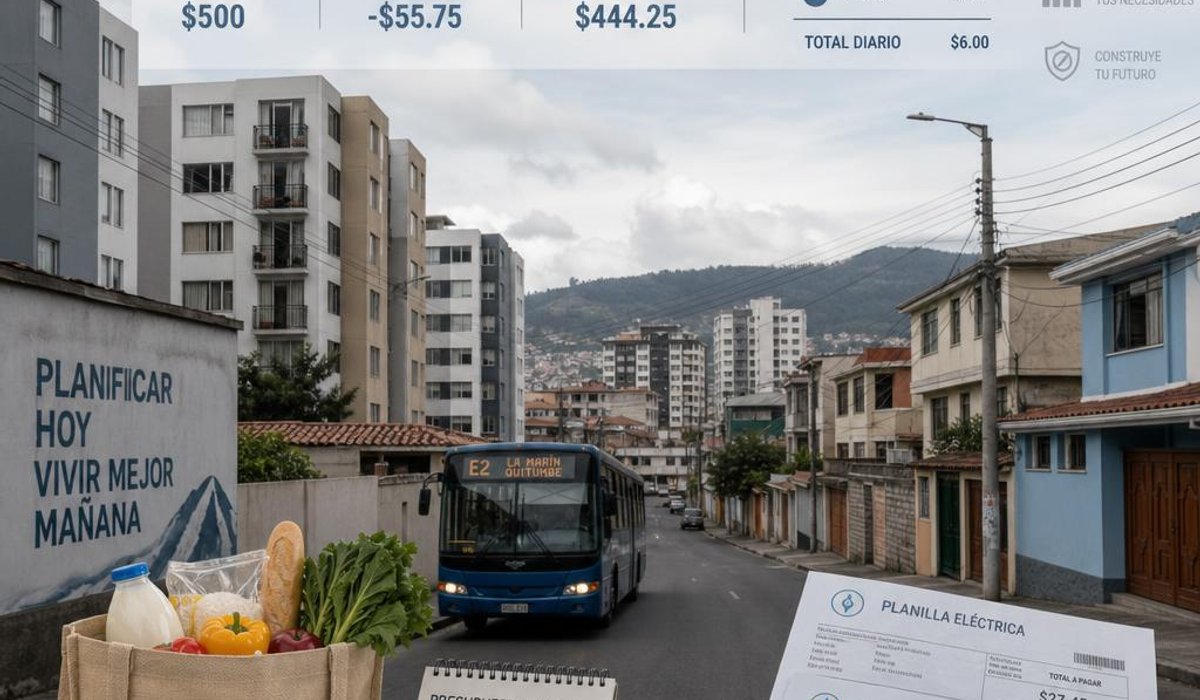
Ecuador will have a new basic salary of USD 500 per month starting January 2027. Although the increase of USD 18 represents an improvement for workers, after the personal contribution to the IESS of 9.45%, approximately USD 452.75 will remain. Is it enough to cover food, housing, transportation, and basic services? We analyze the impact.
## Ecuador will have a basic salary of USD 500 from 2027
The government of Daniel Noboa announced the increase of the Unified Basic Salary (SBU) from USD 482 to USD 500 per month, a measure that will take effect on January 1, 2027. The increase represents an additional USD 18 per month, equivalent to approximately 3.73%.
The announcement was made on November 23, 2026, and was recorded in Executive Decree 538, which orders the National Council of Labor and Salaries to be informed of the new amount and to issue the corresponding ministerial agreement.
The decision represents an increase in the minimum wage for workers, but it also opens a discussion that goes far beyond the additional USD 18: is that money really enough to live in Ecuador?
## How much will a worker really receive after the IESS?
Although the new basic salary will be USD 500, that will not necessarily be the amount that reaches the worker's pocket.
For those under an employment relationship earning exactly the basic salary, considering the personal contribution to the Ecuadorian Social Security Institute (IESS) of 9.45%, the monthly deduction would be USD 47.25.
This means that the income after this deduction would be approximately USD 452.75.
In practical terms, the worker would have about USD 15 per day if they distribute that income over the 30 days of the month.
It is important to clarify that this calculation only considers the personal contribution to the IESS and not other possible deductions.
## Is USD 452.75 enough to live decently in Ecuador?
This is where the salary increase deserves a more critical analysis.
A person living alone must cover food, housing, transportation, basic services, communication, health, clothing, and other daily expenses. These are not luxuries, but essential needs.
Rent can represent a significant part of the monthly budget. Added to this are food, transportation, and basic services expenses, which do not disappear when the workday ends.
The situation is even more complicated for those who have children, dependent family members, or must fully assume the expenses of a household.
Therefore, stating that a salary of USD 500 guarantees a decent life would be a hasty conclusion. The disposable income, after deductions, must be analyzed against the real needs of each worker and their family.
## The real increase is not USD 18 in the pocket
Although the government announced an increase of USD 18 per month, the worker will not receive that full difference after the IESS deduction.
Comparing the salaries of 2026 and 2027, the approximate income after the personal contribution goes from USD 436.45 to USD 452.75.
The effective difference is approximately USD 16.30 per month.
This equals just over 54 cents additional per day, taking a 30-day month as reference.
It is undeniable that earning more is preferable to maintaining the same income. However, it is also necessary to ask whether that increase represents a significant improvement compared to the expenses workers must face.
## Working to live or simply to survive
The problem of the basic salary cannot be analyzed solely from the amount established by the government.
Purchasing power must also be considered, that is, the real capacity to buy goods and services with the money received.
A worker may have a nominally higher salary and still experience economic difficulties if the cost of their needs increases or if their income does not allow them to face unforeseen expenses.
Moreover, not all workers have the same conditions. It is not the same to receive USD 500 and live with family members as it is to maintain a household, pay rent, and financially support other people.
Therefore, the salary debate should include a broader discussion about the cost of living, the generation of formal employment, productivity, and the economic conditions of Ecuadorian households.
## The question that remains for Ecuador
The increase of the basic salary to USD 500 for 2027 represents a nominal improvement and should be recognized as such. However, it does not automatically mean that workers will have a financially comfortable life.
The discussion should not end by celebrating a round figure. It should begin by asking how much it costs to live, how much remains after deductions, and what capacity a family has to cover its needs without relying on debt.
Because a decent salary should not only be measured by how much a person receives, but also by what they can really do with that money.
Do you think USD 500 per month is enough to live decently in Ecuador in 2027?